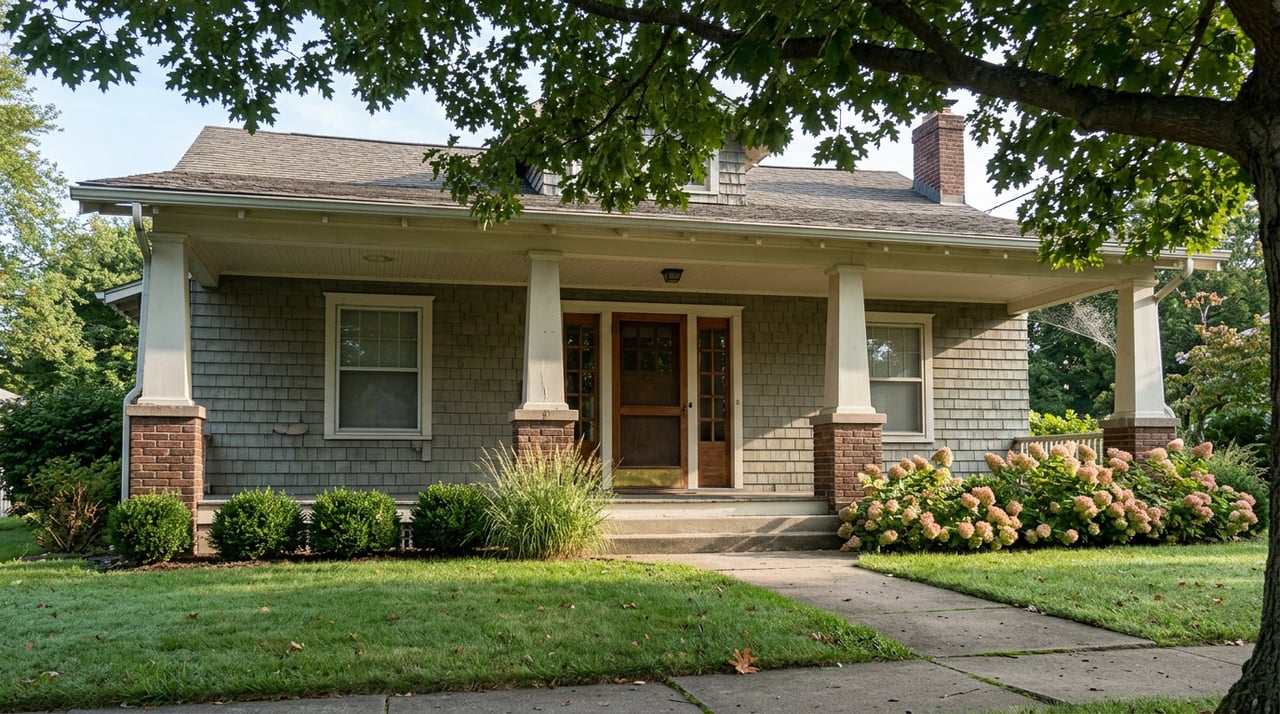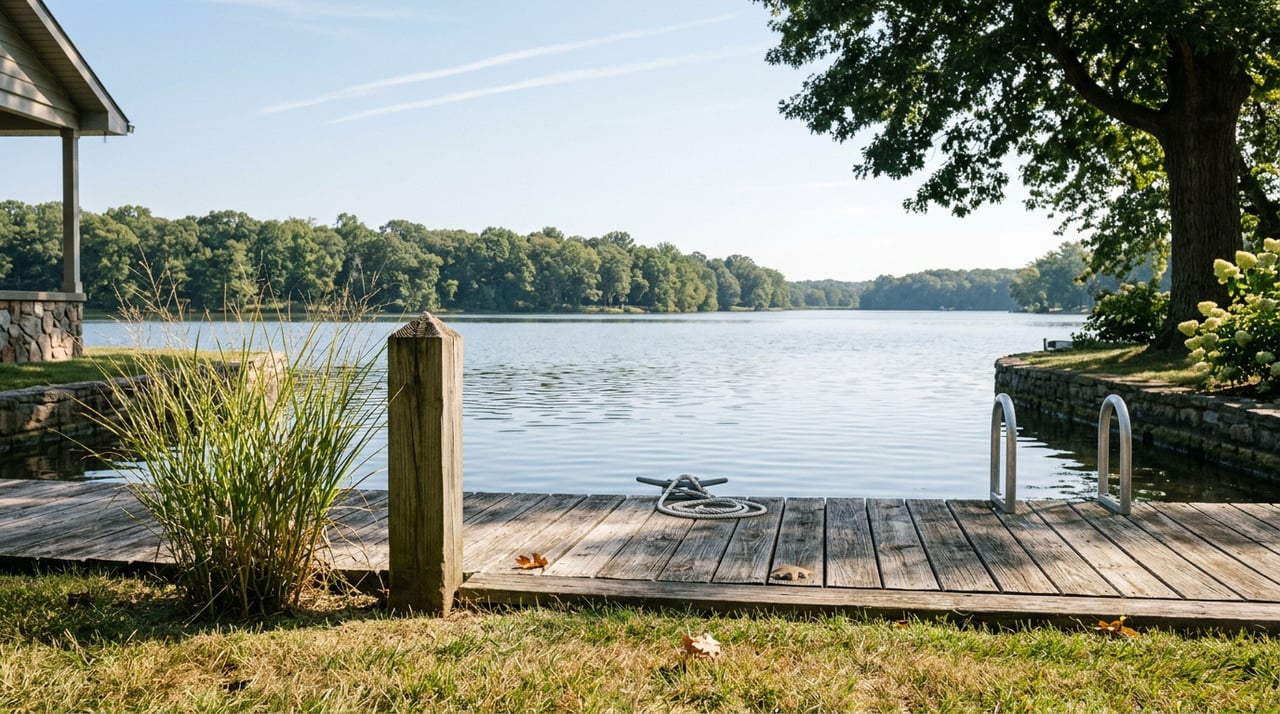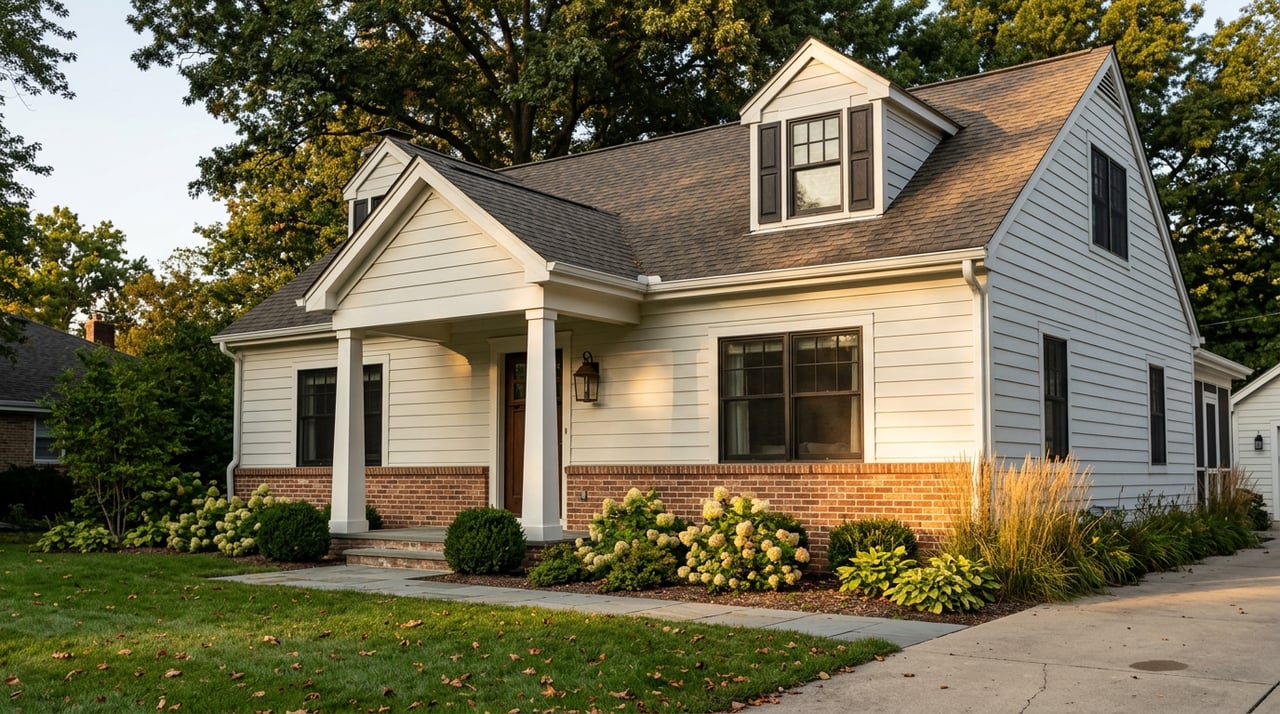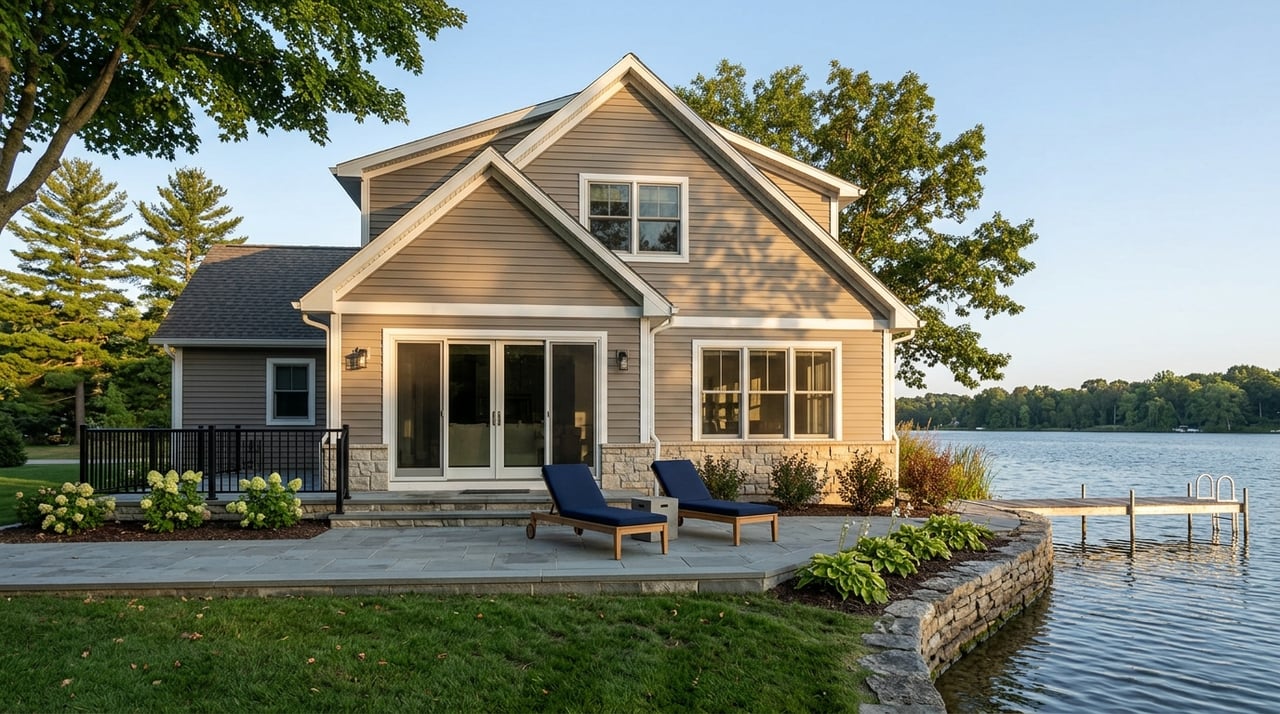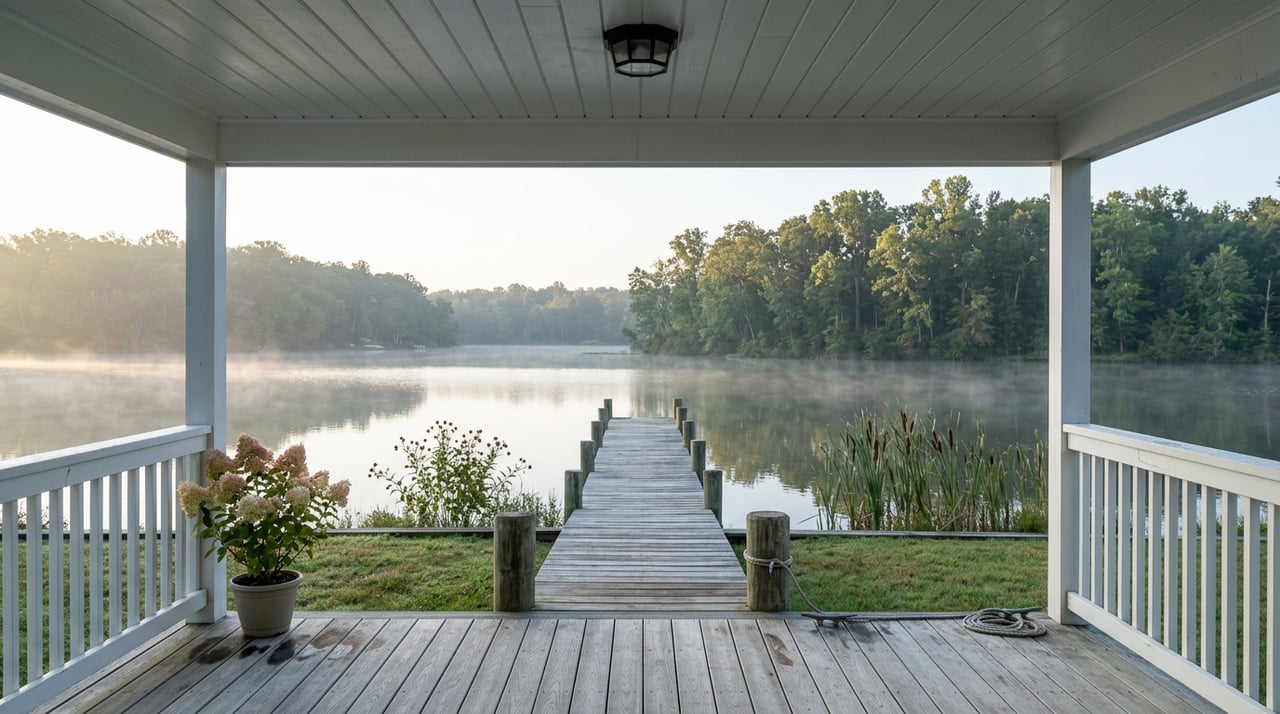
Two listings go up on the same day, both on Cedar Island Lake, both priced within ten thousand dollars of each other. One buyer closes on a home with open water frontage and a wide dock. The other closes on a home tucked along one of the lake's canals, a few turns back from the open water, with a narrow slip and a view of a small bay instead of the main lake. Both listings said "lakefront." Neither buyer was wrong to trust the word. But they bought two different products.
That gap is the thing a median price will never show you, and in White Lake Township, where the water touches roughly a tenth of the land, it shows up constantly.
The Township Median Doesn't Know Which Lake You're On
Portal data pegged the average list price across White Lake Township at $406,633 in the first days of August 2026, drawn from more than 200 active listings on the Realcomp MLS feed. Earlier in the year, a separate snapshot put the median closer to $422,499 with homes spending an average of 34 days on market. A third source, pulling from a different window, showed a median nearer $500,000 with 63 days on market and roughly three months of supply.
None of those numbers are wrong. They're just blended. A township-wide median folds interior subdivisions in with waterfront parcels, ranch homes on quarter-acre lots in with three-acre estates on Grass Lake. If you're specifically comparing lakefront homes to each other, the published median tells you almost nothing about what you're actually choosing between. You need to go one level deeper, to the lake itself.
More Than Twenty Lakes, Not One Product
White Lake Township holds just over twenty named lakes, and they don't behave the same way. Cedar Island Lake is an all-sports lake of roughly 169 acres with wide canals that open into small bays, which means you can buy frontage on a quiet finger of water without ever touching the open lake, often at a lower price than a home on the main body. Cooley Lake, which straddles the border with Commerce Township, is a private 86-acre all-sports lake, meaning access is restricted to residents and their guests rather than open to the public. Tull Lake is smaller, around 90 acres, also private, but with restrictions on jet skis and larger motors, so the experience is quieter even though boats are still allowed. Pontiac Lake is the outlier at roughly 612 acres, all-sports, with a state park on its shore and multiple islands scattered across the water.
Here's a rough comparison of what that variety looks like in practice:
| Lake | Approx. size | Designation | What that means for a buyer |
|---|---|---|---|
| Cedar Island Lake | ~169 acres | All-sports, public | Canal and bay lots offer lower-cost access without open-water frontage |
| Cooley Lake | ~86 acres | All-sports, private | Restricted to residents, less boat traffic than a public lake |
| Tull Lake | ~90 acres | All-sports, private | Motor and jet ski limits keep it quieter despite the all-sports label |
| Pontiac Lake | ~612 acres | All-sports, public | State park access, multiple islands, more boat volume |
The label "all-sports" tells you what's legally permitted on the water. It tells you nothing about how crowded that water will feel, what it costs to maintain your access to it, or what happens if the lake needs work.
The HOA Line Isn't the Whole Story
A homeowners association fee on a listing sheet looks like a fixed, comparable number. In this township, it's closer to a hint. On the Cooley Lake corridor, one listing carried an HOA fee of $125 a year for a private dock and use privileges on the neighboring lake. A separate homeowners association serving Long Lake in the same area sets its dues at $20 per home per year. Two lakes, ten minutes apart, and a fee structure that differs by a factor of six.
White Lake itself runs on a different mechanism entirely. Properties on or with deeded access to White Lake fall inside a Special Assessment District managed by the White Lake Improvement Board, a body formed more than thirty years ago to handle weed control, dredging, water testing, and safety on the lake. That assessment isn't a club membership you can decline. It's a government-backed charge that shows up on the winter tax bill for roughly 1,600 properties across White Lake and Highland townships, with marina slips assessed at $98 per year under the current rate schedule set through 2026.
A private HOA and a county Special Assessment District are not the same category of obligation. One is a contract you can review before you sign. The other is a lien mechanism tied to the parcel itself, and it moves with the property whether the next owner reads the fine print or not.
Same Lake, Different Lot
Even within a single lake, the physical product varies more than most buyers expect. Township assessment records show Cedar Island Lake parcels ranging from roughly 0.11 to 0.64 acres, a spread that covers everything from a tight in-town lot to something with real elbow room. On Cooley Lake, parcels run up to about 1.12 acres on the deeper, wider lots along the north side.
That range matters for reasons beyond square footage. A narrow parcel limits dock placement and can bump up against shoreline setback rules the township enforces within 500 feet of the water. A deeper lot gives you more room to negotiate future additions or outbuildings without a variance fight. Two homes advertised as waterfront on the identical lake, at the identical price point, can hand you very different amounts of usable shoreline. The only way to know before you write an offer is to pull the parcel dimensions yourself through Oakland County's Property Gateway, which publishes tax parcel reports and historical aerials for free.
Assessments Can Start After You Close
Here's the part that catches people off guard after the deal is done. In August 2025, the White Lake Township board approved Resolution 25-025, establishing a special assessment district for Mandon Lake Weed Control and Lake Management covering 2026 through 2030. That district didn't exist when homes around that lake were bought the year before. It exists now, and it will appear on tax bills for the length of the program.
A Special Assessment District doesn't have to exist at closing to affect you later. It can be voted into existence by a township board after you already own the parcel.
This is the single most useful thing a buyer can do before comparing two lakefront listings: ask not just what's currently assessed, but whether any lake-specific improvement project has been proposed or is under public hearing. Township board packets are public record, and a quick check before closing can save a surprise on a tax bill two years out.
What's Under Construction This Year
Buying near a specific lake also means buying into that lake's current road conditions, and 2026 has brought real work to at least one corner of the township. Pontiac Lake Road is in the middle of a $5.8 million repaving project that started this year and continues into 2027, with work concentrated near Margie Drive. Anyone touring homes on or near Pontiac Lake this season should expect some lane restrictions along that stretch.
There's a smaller, more personal example a few miles away. A 62-year-old bridge on Avonlea Avenue was taken out of service for good last year after an inspection found it had deteriorated too far to carry traffic safely, with replacement construction expected to begin this year. None of this changes what a home is worth. It changes what showing up to see it, or living there through a construction season, actually feels like, and it's the kind of detail a listing sheet never mentions.
Questions Worth Asking Before You Compare Two Listings
Before setting two "lakefront" homes side by side on price alone, it's worth getting answers to:
- Is this direct frontage, deeded access, or association-controlled access to the water?
- What's the lake's designation: all-sports, private, or non-motorized, and what does that mean for boat traffic on a summer weekend?
- Is the carrying cost a private HOA fee, a county Special Assessment District, or both?
- Has the township board discussed or approved any lake improvement project for this specific lake in the last two years?
- What's the actual parcel size and shoreline length, verified through county records rather than the listing description?
A Few Questions We Hear Often
Is "lake access" the same as "lakefront"? No. Lake access usually means the property or its owners have rights to use a shared launch, beach, or dock without directly touching the water from their own lot. Lakefront means the parcel itself borders the water. Both can be labeled loosely in marketing copy, so it's worth confirming which one you're actually looking at.
How do I find out if a lake has a Special Assessment District? Township board meeting minutes and resolutions are public record and posted online. For an existing district like White Lake's, the improvement board publishes rate history and hearing materials directly.
Does the assessment structure affect financing? It can factor into a lender's review of recurring obligations tied to the property, similar to how a condo association fee gets evaluated. It's worth flagging early with your lender rather than discovering it during underwriting.
Buying on the water here rewards patience more than speed. The lake name on a listing is a starting point, not the answer, and the difference between two homes that look identical on paper often comes down to details that only show up once you start asking. If you're weighing options across White Lake Township's lakes and want a second set of eyes on what a specific parcel actually includes, Sheryl Kersten has spent nearly thirty years working these transactions street by street, and lake by lake. Let's Connect.